
PHOENIQS Takes Over New Sovereign AI Data Center at uptownBasel
A major milestone for soreign AI infrastructure in Switzerland is becoming reality at uptownBasel. In a symbolic handover ceremony, Hans-Jörg Fankhauser, the innovator and driving force behind uptownBasel, officially handed over the new AI data center environment to the PHOENIQS leadership team represented by Angel Nunez, Carla Bünger and Stefan Taroni.
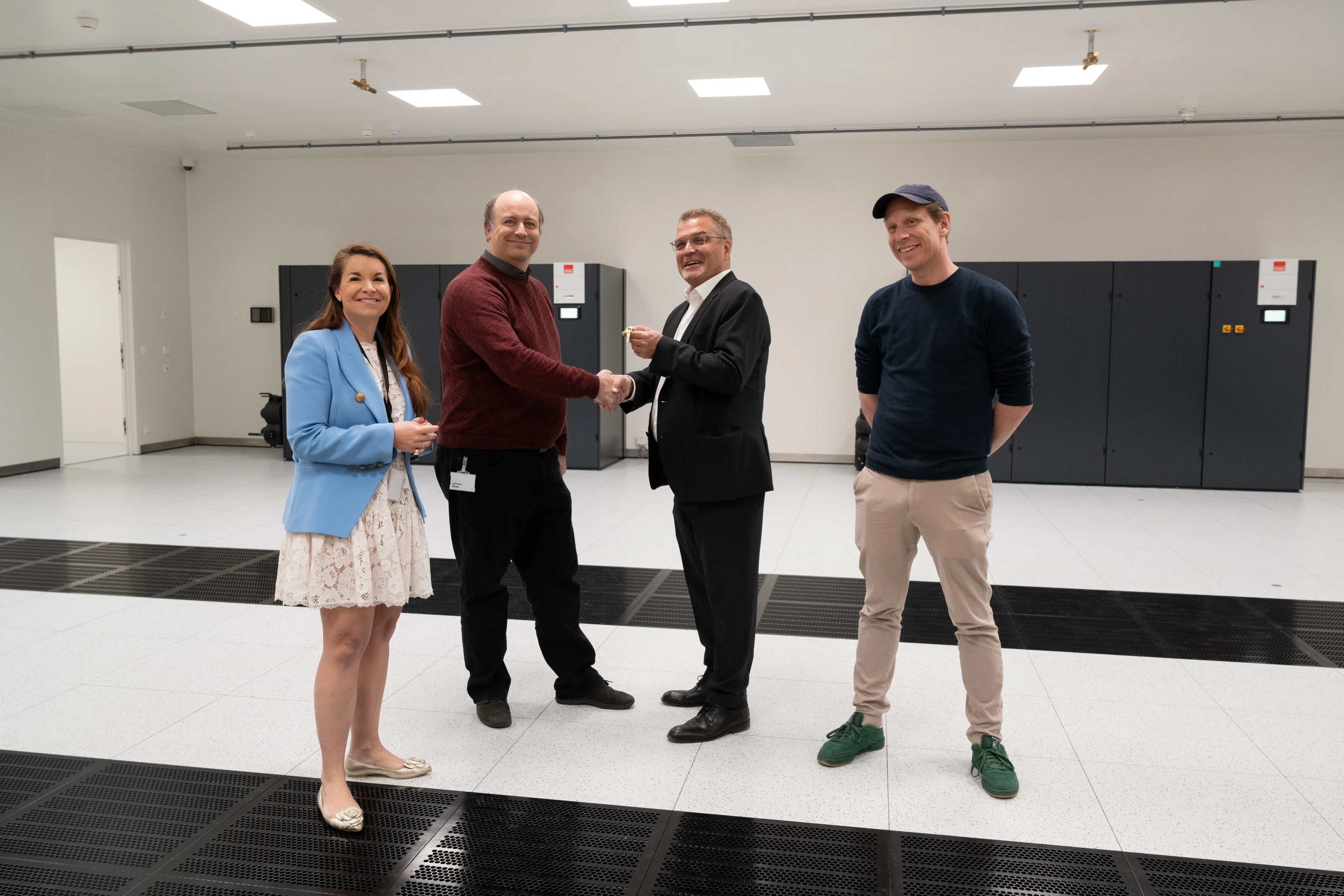
Carla Bünger (PHOENIQS), Angel Nunez (PHOENIQS), Hans-Jörg Fankhauser (FANKHAUSER) and Stefan Taroni (PHOENIQS)
The new facility, integrated into the Pioneer building at uptownBasel, marks another important step toward enterprise-grade AI infrastructure fully operated under Swiss jurisdiction.
More than just another compute deployment, the project represents a strategic investment into Switzerland’s digital future. The new infrastructure is designed to enable organizations to scale artificial intelligence securely, efficiently, and independently — without relying on hyperscaler environments or exposing critical workloads to foreign legal frameworks.
At the center of the deployment is the AI supercomputer platform, delivering high-performance AI capabilities optimized for enterprise workloads, sovereign operations, and future-ready innovation.
AI Infrastructure Is More Than GPUs
While modern GPUs are often at the center of discussions around AI infrastructure, the compute layer itself is only one part of the equation. What is frequently underestimated is the massive operational infrastructure required around modern AI systems.
High-density AI environments demand entirely new standards for cooling, power distribution, resiliency, and operational engineering. The real challenge is not only generating AI performance — but sustaining it reliably, securely, and efficiently at scale.
At the new PHOENIQS AI facility inside uptownBasel, this challenge is addressed through a highly engineered infrastructure environment specifically designed for enterprise AI operations.
Advanced Cooling for High-Density AI Workloads
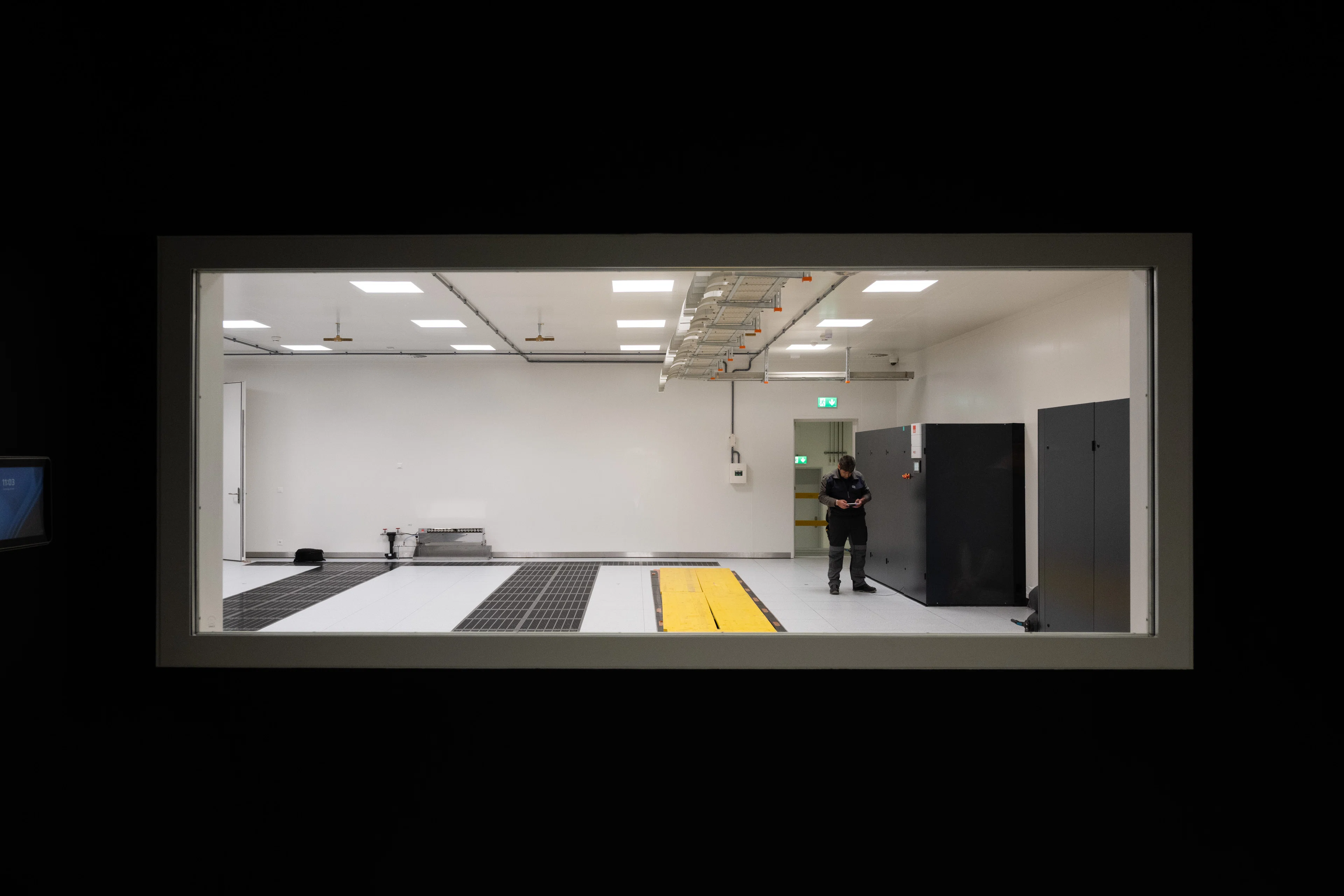
The facility utilizes a highly dense chilled-water cooling system from Vertiv and STULZ to support the thermal demands of next-generation AI computing.
Water-based cooling units remove heat directly at rack level, while cold air is distributed through an underfloor system into the data center environment. The air absorbs heat generated by the systems before being returned into a controlled cooling cycle.
This architecture creates a highly efficient and resilient cooling environment with significantly higher energy efficiency compared to traditional cooling systems. It also ensures the stable operating conditions required for large-scale AI workloads and continuous enterprise operations.
Power Infrastructure Built for AI at Scale
Equally critical is the power infrastructure behind the system.
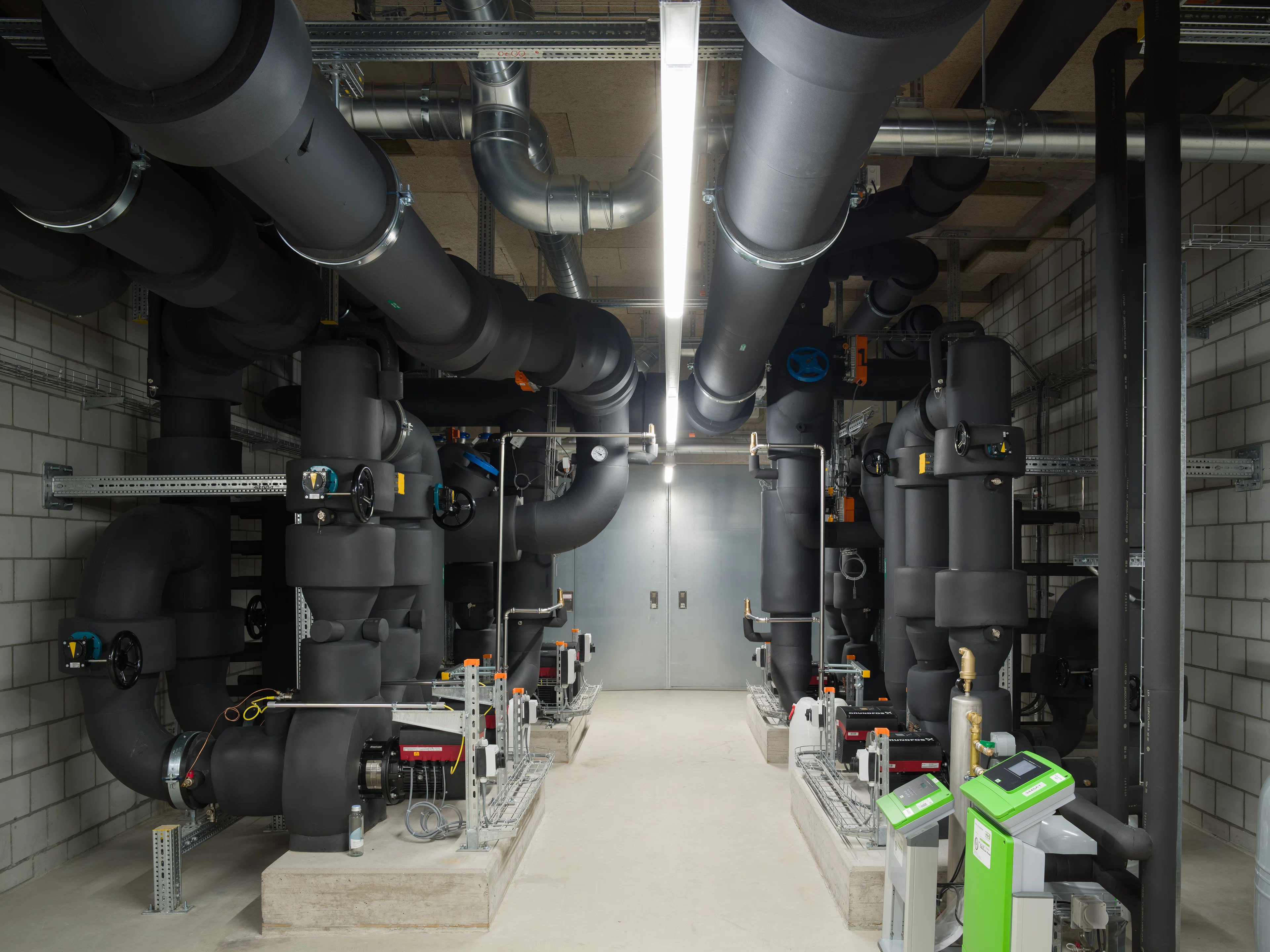
Modern AI computing requires vast and highly stable energy capacities. To support these demands, the uptownBasel campus operates a large-scale energy architecture designed specifically for high-performance digital infrastructure.
Two major transformers, each operating at 40MV, reduce the incoming voltage supplied by Swissgrid AG and Primeo Netz AG from 145,000 volts down to 20,000 volts. Across the campus, more than 30 additional transformers distribute power locally at 400 volts to operational environments.
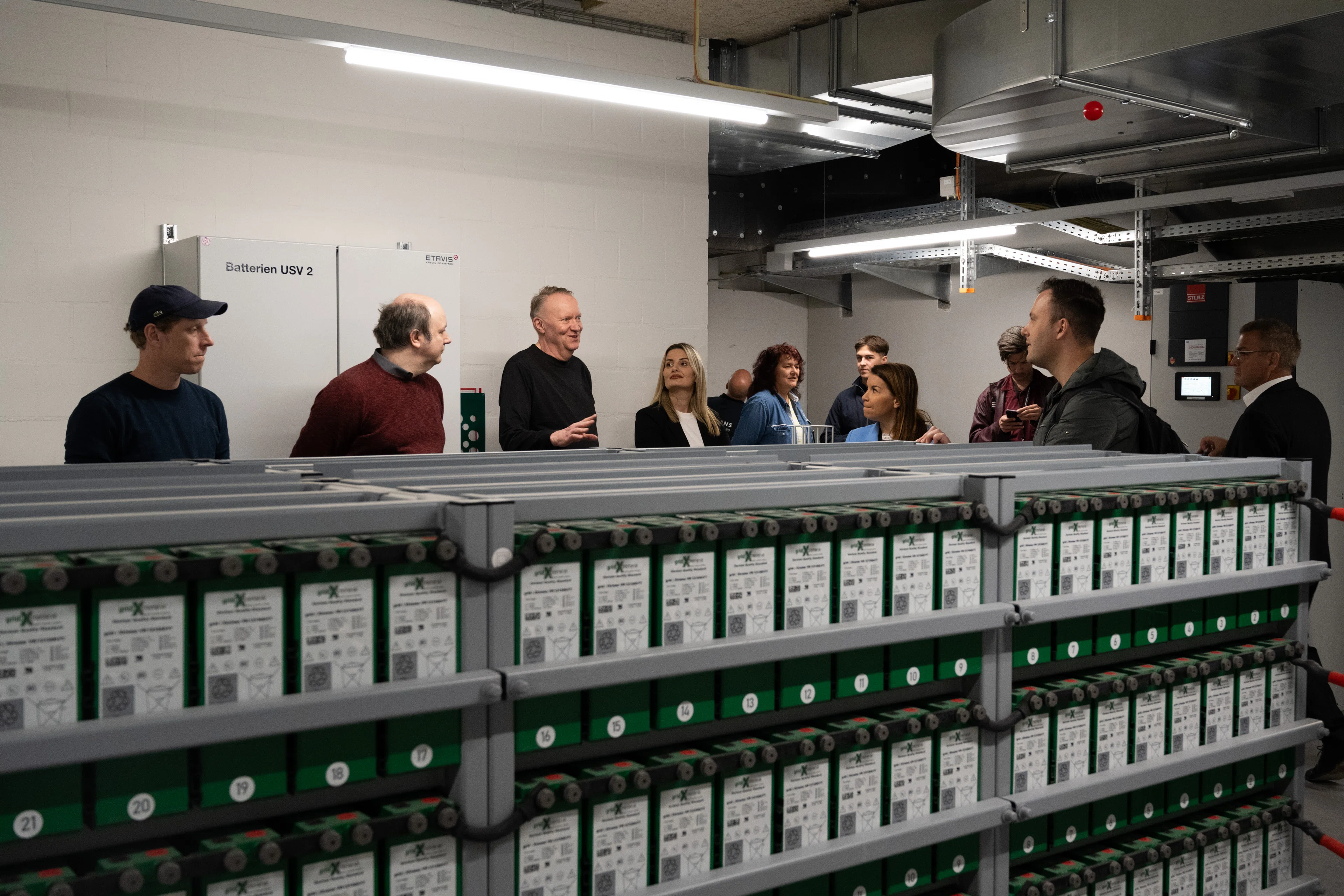
This infrastructure ensures stable, high-availability power delivery even under high AI workloads and peak processing conditions.
The resulting waste heat is not lost. Instead, it is reused to help heat the surrounding campus and integrated into the district heating network operated by Primeo Wärme AG, contributing to a more sustainable and energy-efficient AI ecosystem.
Sovereign AI Infrastructure Made in Switzerland
For PHOENIQS, the new facility represents far more than technical capacity. It reflects a broader vision around digital sovereignty, trusted AI, and independent infrastructure.
Organizations across Europe increasingly face the challenge of scaling AI while maintaining full control over their data, models, intellectual property, and operational environments. Many existing AI platforms are built around hyperscale architectures that introduce legal, operational, and geopolitical dependencies.
PHOENIQS addresses this challenge through a fully sovereign AI stack operated in Switzerland and designed around security, compliance, transparency, and operational independence.
The infrastructure enables enterprises to modernize workloads, optimize costs, and accelerate innovation while retaining complete control over where systems run, how data is processed, and under which jurisdiction operations are governed.
Enabling Switzerland’s AI Ecosystem
On top of this sovereign infrastructure, PHOENIQS is also making Apertus — Switzerland’s open large language model — available to organizations.
Developed by ETH Zürich, EPFL, and the Swiss National Supercomputing Centre, Apertus represents a major step toward open, transparent, and sovereign AI development in Switzerland.
By combining sovereign infrastructure with open AI models, PHOENIQS enables organizations to deploy AI systems with significantly higher levels of trust, transparency, and operational control.
A Foundation for the Next Generation of Enterprise AI
The AI data center at uptownBasel demonstrates that sovereign AI is no longer a theoretical concept — it is becoming operational reality.
As enterprises increasingly recognize AI as critical infrastructure, the importance of secure, resilient, and sovereign compute environments will continue to grow. Projects like this establish the technological foundation required to scale AI responsibly while preserving trust, control, and independence.
With the new AI infrastructure at uptownBasel, PHOENIQS is helping build exactly that foundation for Switzerland and beyond.